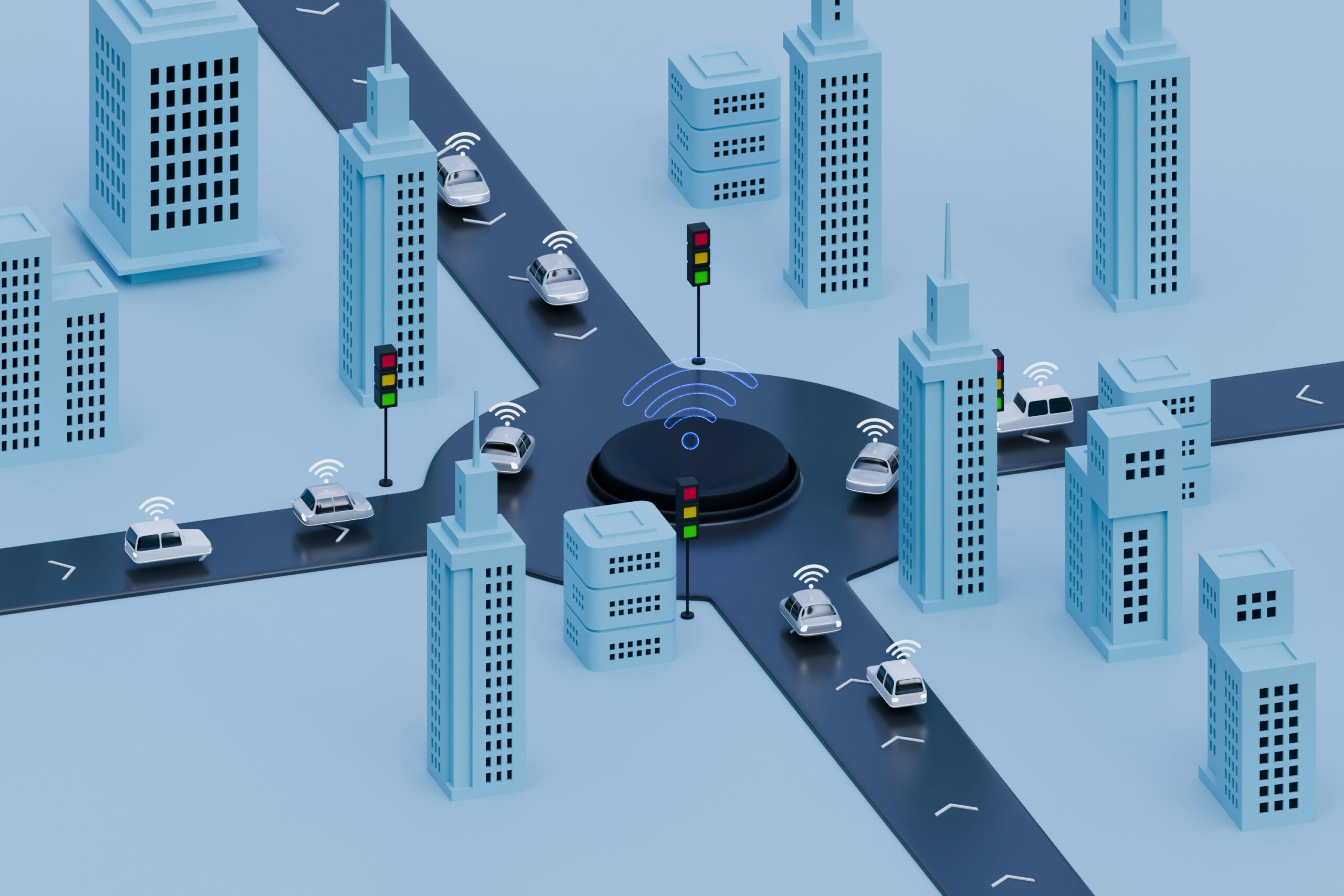
Urban living is changing rapidly as cities expand and populations continue to rise. Roads grow busier, public transit systems face higher demand, and environmental pressure increases every year. In response, governments and technology developers are introducing smart cities transportation solutions that combine digital intelligence, automation, and sustainable design. These innovations reshape how people move through cities by making travel faster, safer, and more efficient while reducing pollution and congestion. As urban areas evolve, transportation is no longer just about movement but about building connected ecosystems that support modern life.
AI-Powered Mobility Optimization in Modern Cities
Artificial intelligence now plays a central role in smart cities’ transportation solutions by analyzing massive amounts of traffic data in real time. City systems use AI to monitor road activity, detect congestion, and adjust traffic signals instantly. As a result, vehicles move more smoothly through intersections and overall travel delays decrease significantly.
In addition, AI tools help city planners understand long-term mobility patterns by studying commuter behavior. This allows authorities to design better road networks and improve traffic distribution across different zones. Consequently, urban mobility becomes more predictable, and cities reduce the daily stress caused by traffic congestion.
Digital-First Public Transportation Experience
Public transport systems have evolved significantly through smart cities transportation solutions that focus on digital integration. Commuters now use mobile apps to track buses, trains, and trams in real time. As a result, passengers no longer rely on fixed schedules alone and can adjust their travel plans based on accurate updates.
Furthermore, digital payment systems simplify access to transportation by replacing cash-based ticketing with contactless options. This reduces waiting times and improves boarding efficiency. Therefore, public transport becomes more user-friendly, encouraging higher ridership and reducing dependency on private vehicles.
Clean Energy Transition in Urban Mobility
Sustainability is a major priority within smart cities transportation solutions, especially as cities aim to reduce carbon emissions. Electric buses, solar-powered charging stations, and hybrid fleets are becoming common in urban environments. As a result, cities significantly lower air pollution levels while promoting cleaner mobility options.
Moreover, governments are investing in policies that support low-emission zones and green transportation infrastructure. These initiatives encourage residents to adopt environmentally friendly travel habits. Consequently, urban areas experience improved air quality and healthier living conditions over time.
Smart Infrastructure and Connected Road Systems
Modern infrastructure is evolving rapidly due to smart cities transportation solutions that integrate sensors, communication systems, and automated monitoring tools. Roads now collect data on traffic flow, weather conditions, and vehicle density. As a result, cities can manage transportation more efficiently and reduce accident risks.
In addition, connected road systems communicate directly with vehicles and traffic control centers. This interaction improves coordination across the entire transportation network. Therefore, cities achieve smoother traffic movement and better emergency response times in critical situations.
Shared Mobility and On-Demand Transport Growth
Shared mobility has become a major part of smart cities’ transportation solutions as people increasingly use ride-sharing, carpooling, and micro-mobility services. These systems reduce the number of private vehicles on the road, which helps ease congestion in busy urban areas.
Furthermore, on-demand transport services allow users to travel more flexibly without owning a car. Electric scooters, bike-sharing platforms, and app-based ride services offer convenient alternatives for short-distance travel. As a result, cities become more efficient and reduce unnecessary energy consumption.
Predictive Analytics for Urban Traffic Control
Predictive analytics is transforming smart cities’ transportation solutions by helping authorities forecast traffic conditions before they occur. By analyzing historical and real-time data, systems can predict congestion hotspots and suggest preventive measures. As a result, cities avoid traffic buildup rather than reacting after problems arise.
Additionally, predictive models help optimize public transport schedules based on expected passenger demand. This ensures that buses and trains are allocated more efficiently. Therefore, transportation systems operate more reliably and reduce unnecessary delays for commuters.
Inclusive Mobility and Last-Mile Innovation
Last-mile connectivity remains an essential focus of smart cities transportation solutions because it determines how easily people reach their final destinations. Cities are introducing flexible options like shared bikes, compact electric shuttles, and pedestrian-friendly pathways. As a result, commuters experience smoother and more complete journeys.
Moreover, inclusive mobility ensures that transportation systems serve all communities, including suburban and underserved areas. These improvements help reduce inequality in access to public services. Therefore, cities become more connected and socially balanced, improving overall quality of life for residents.
Future Urban Mobility Ecosystems
The future of smart cities transportation solutions will focus on fully integrated mobility ecosystems where vehicles, infrastructure, and digital platforms work together seamlessly. These systems will rely heavily on automation, machine learning, and ultra-fast connectivity. As a result, transportation will become more adaptive and intelligent than ever before.
In addition, future innovations may include autonomous air taxis, underground transit systems, and fully electric logistics networks. These advancements will redefine how cities handle the movement of both people and goods. Consequently, urban environments will become more efficient, sustainable, and prepared for continued growth.